Imagined creators. Considered stories.An independent journal · Montreal, Canada

The dossier archive

Every creator has
a point of view.

Explore thirteen original characters, each with a distinct setting, signature format and way of welcoming an audience. These are imagined worlds, built to be read closely.

Find your kind of story.

13 profiles to explore

Studio portrait illustrating Kaelen "Valkyr" Vance’s fictional profile

Vancouver, BC · Tactical worlds

Kaelen "Valkyr" VanceSlow strategy, sound design and game archaeology

Valkyr turns orbital defence maps into patient detective stories. His Vancouver broadcast follows one question at a time, inviting the Midnight Cartographers to annotate suspicious routes, compare competing explanations and listen for the clues hidden inside a simulated world.

StrategyFictional creator
Read the full dossierClose the dossier

Kaelen’s signature opening is a map with one unexplained mark. Before a unit moves, he asks what the terrain is telling him: an abandoned relay, a corridor that carries sound unusually far, a supply route that seems too convenient. The interest lies in watching a working theory develop, including the moment it has to be abandoned. His dry delivery leaves room for viewers to form their own answers.

The Midnight Cartographers maintain a shared vocabulary without turning it into an entrance exam. A ‘soft signal’ means an interesting possibility; a ‘fixed point’ means an observation the current session has actually demonstrated. Kaelen restates both at natural intervals, so a reader arriving halfway through the story can understand what is known and what remains uncertain. The distinctions make disagreement useful rather than personal.

Our favourite element is his closing field note. He returns to the original map, marks the mistakes that changed his approach, and chooses one unresolved question for a later episode. The format rewards continuity, yet every instalment still offers a complete small investigation. In this fictional archive, Valkyr represents strategy as a process of noticing, revising and explaining.

Community ritual

The closing field note separates confirmed observations from the next session’s open questions.

Look a little closer

Watch how a failed theory becomes a clearer map rather than an excuse to restart the story.

Studio portrait illustrating Marlo "Drift" Chen’s fictional profile

Toronto, ON · City simulations

Marlo "Drift" ChenUrban planning challenges and civic satire

Marlo’s imaginary city council convenes whenever a beautifully planned district stops working. Dry civic satire gives his Toronto simulation sessions their voice, while transparent budgets, transit experiments and a willingness to revisit bad decisions give each episode a satisfying structure.

StrategyFictional creator
Read the full dossierClose the dossier

Marlo Chen is interested in the difficult second draft of a city. His districts begin with an attractive promise—short journeys, generous parks, a thriving waterfront—before delivery routes and competing priorities complicate the picture. Instead of hiding the compromise, he places it at the centre of the broadcast. A fictional council agenda supplies the episode’s questions and keeps a sprawling simulation understandable.

His Urban Syndicate does not vote on every junction. Viewers first hear the constraints, then discuss two or three proposals with different costs. Marlo explains which suggestion he adopts and why the others remain on the planning board. The running joke is his solemn respect for absurdly small municipal details: a bench relocation can receive the same ceremonial introduction as a new railway.

The strongest sessions compare the intended result with the city that actually emerges. A faster road may make a neighbourhood less pleasant; an expensive route may prove easier to maintain. These are story problems inside a simulation, not advice for real infrastructure. Marlo’s distinction is his ability to give complicated systems a human scale without pretending every trade-off has a neat solution.

Community ritual

A short council minute records the decision, its cost and the question that remains open.

Look a little closer

Notice the gap between a plan’s elegant diagram and the behaviour of the finished district.

Studio portrait illustrating Saffron "Hex" Diaz’s fictional profile

Montreal, QC · Precision practice

Saffron "Hex" DiazRhythm challenges and narrated practice labs

Saffron makes precision readable. In her Montreal practice lab, a difficult movement becomes a sequence of small choices, shown at normal speed and then unpacked carefully. Her Precision Pulse community values a useful explanation as much as a clean attempt.

CompetitiveFictional creator
Read the full dossierClose the dossier

Saffron Diaz opens a practice session by naming a single skill. It may be the approach to a narrow platform, the timing of a rhythm transition or the recovery after an imperfect landing. She demonstrates the full sequence before slowing it down, giving viewers a destination before introducing the details. Her commentary is energetic but precise, with space between attempts to understand what changed.

The Precision Pulse has a useful rule: describe the action before judging the outcome. A failed run can still contain a better approach, while a successful one may conceal a habit that will cause trouble later. Saffron uses simple on-screen markers to distinguish setup, decision and execution. The language welcomes curious newcomers without flattening the challenge for readers who enjoy technical detail.

A finished episode ends with a compact practice note, not an invented record announcement. Saffron identifies the most repeatable improvement and the part that still needs work. That makes her fictional arc about learning to explain a skill, rather than endlessly raising a numerical target. The appeal is the moment a movement that looked mysterious becomes something the audience can actually follow.

Community ritual

The practice note names one repeatable improvement and one unfinished experiment.

Look a little closer

Watch the recovery after a mistake; it often reveals more than the cleanest attempt.

Studio portrait illustrating Nyx "Solstice" Tremblay’s fictional profile

Montreal, QC · Route finding

Nyx "Solstice" TremblaySpeedrun routing and bilingual community clinics

Nyx treats a fast route as a piece of music: patterns repeat, pauses matter and a small variation can change the whole performance. Her Montreal sessions pair careful route comparisons with friendly bilingual explanations and an unmistakably playful sense of timing.

CompetitiveFictional creator
Read the full dossierClose the dossier

Nyx Tremblay’s stories begin at the fork in a route. One path looks faster, another offers a safer recovery, and a third reveals an overlooked mechanic. She runs each version long enough to explain its character rather than declaring a winner after one lucky attempt. Gentle musical cues mark transitions between exploration, comparison and a final run through the selected route.

Her community, the Solstice Workshop, enjoys translating specialist vocabulary into ordinary language. French and English phrases appear naturally in the imagined chat, with Nyx restating essential instructions so nobody has to guess what the group means. The most useful viewer contribution is often a clear question. She preserves those questions in the episode recap alongside the route itself.

Nyx’s competitive edge comes from consistency rather than manufactured pressure. A session has a defined stopping point, and unfinished routes can wait for another chapter. We return to her profile for the combination of technical curiosity and good comic timing: she can explain a demanding sequence without making its difficulty feel like a test of the audience. The resulting fiction celebrates improvement without reducing every moment to a result.

Community ritual

The workshop closes by giving the chosen route a short name and explaining its biggest compromise.

Look a little closer

Look for the small recovery options that make a route dependable across several attempts.

Studio portrait illustrating Dax "CivicZero" Chen’s fictional profile

Toronto, ON · Systems and settlements

Dax "CivicZero" ChenColony infrastructure and resource-chain experiments

Dax follows the life of a resource from its first collection to its final use. His Toronto colony simulations turn bottlenecks into stories, asking how one modest change might improve an entire settlement without sacrificing the character of its neighbourhoods.

StrategyFictional creator
Read the full dossierClose the dossier

Dax Chen approaches colony builders like a curious systems editor. Rather than starting with a spectacular skyline, he follows a worker, a shipment or a single power line. That close view exposes the hidden dependencies behind an attractive settlement. He draws a modest diagram, makes one intervention and returns to the same route to see whether the change helped.

The Civic Ledger, his fictional community notebook, records assumptions as carefully as results. A proposed shortcut has to name what it might disrupt: storage space, walking distance, reserve capacity or the rhythm of an existing district. Dax gives the notebook’s disagreements time to breathe. He is more interested in showing why two sensible suggestions conflict than in turning the discussion into a poll with an obvious winner.

His best episodes retain an old structure that would have been easier to demolish. The constraint encourages inventive routing and gives the settlement a visible history. This is the difference between Dax and fellow Toronto strategist Marlo: where Marlo stages the argument around a council table, Dax follows its consequences through the streets. Both belong to the same imagined city-building conversation, but their methods remain distinct.

Community ritual

One resource takes a ceremonial final journey through the revised network at the end of each session.

Look a little closer

Follow the smallest bottleneck before looking at the most impressive building.

Studio portrait illustrating Mara "EchoGrid" Thorne’s fictional profile

Calgary, AB · Team tactics

Mara "EchoGrid" ThorneTactical replays and clear team communication

Mara listens before she moves. Her Calgary tactical sessions examine how teams share incomplete information, with replay notes that separate a sound, an assumption and a decision. The result is competitive storytelling built around composure, communication and a generous post-match review.

CompetitiveFictional creator
Read the full dossierClose the dossier

Mara Thorne’s broadcasts begin with a short communication agreement. What counts as a useful call? Which details can wait? When should a teammate say they are uncertain? These questions become practical during a match, when a distant sound or a half-seen movement can pull a squad in the wrong direction. Mara’s restrained commentary lets the audience hear the information the team actually had.

After a round, the EchoGrid review separates observation from interpretation. She repeats a call as it was made, pauses at the decision point and asks which alternative was available at that moment. The review avoids pretending that a later reveal should have been obvious earlier. Teammates get room to explain their reasoning without becoming the punchline of the episode.

The distinctive drama is collective. A well-timed retreat can be more satisfying than a spectacular individual play because viewers understand the shared decision behind it. Mara’s fictional community carries that principle into discussion: challenge the reading of a situation, not the person offering it. Her dossier explores how a competitive format can remain exacting while making space for uncertainty, revision and respect.

Community ritual

The final replay highlights one useful team call, regardless of whether the round was won.

Look a little closer

Listen for the moment someone names uncertainty clearly enough for the whole team to act.

Studio portrait illustrating Zephyr "Crossbones" Roy’s fictional profile

Halifax, NS · Audio storytelling

Zephyr "Crossbones" RoyEnsemble roleplay and atmospheric radio theatre

Zephyr gives imaginary worlds an audible geography. From his Halifax story desk, footsteps, voices and carefully placed silences turn a tabletop encounter into a compact radio play. The audience helps preserve continuity while the performers keep control of the scene itself.

NarrativeFictional creator
Read the full dossierClose the dossier

Zephyr Roy builds a scene from a sound before revealing its setting. A loose shutter, a rope crossing a pulley or a room that echoes a little too long can establish a place without a paragraph of explanation. His ensemble then enters with a clear immediate problem. The audience learns the world through what the characters need, fear and misunderstand.

The Crossbones company separates performance from its informal interval. During a scene, the chat can offer observations without directing every line. Between scenes, Zephyr explains a sound choice, revisits a continuity question and introduces the next chapter’s boundaries. A short recap makes returning characters legible to newcomers while keeping the older audience’s memory useful rather than exclusive.

His strongest fictional episodes allow an ordinary object to gather meaning: a key changes hands, a bell becomes a warning, an unreliable map acquires a correction. Those repeated details give improvised stories a feeling of intention. We read Zephyr as a study in collaborative authorship, where preparation supports spontaneity and a well-timed silence can do more work than another dramatic speech.

Community ritual

The interval reveals one sound-making technique and revisits a single thread from the story archive.

Look a little closer

Listen for an ordinary sound returning with a different meaning later in the episode.

Studio portrait illustrating Juno "Larkspur" Mercer’s fictional profile

Ottawa, ON · Cozy making

Juno "Larkspur" MercerLandscape builders and small studio craft projects

Juno moves between a virtual garden and a small worktable, using each to reconsider the other. Her Ottawa sessions give paths, textures and imperfect handmade objects a shared vocabulary, with projects small enough to reach a thoughtful stopping point in one episode.

CreativeFictional creator
Read the full dossierClose the dossier

Juno Mercer begins with a material question: what makes a path inviting, why does a wall feel heavy, or how can an empty corner become a place to pause? She explores it first inside a landscape builder, then with a simple object at her worktable. The connection is observational rather than instructional; a clay surface might inspire a garden edge without pretending the two processes are identical.

Her Larkspur Circle notices small decisions. Viewers suggest names for a garden bed, compare the feeling of two entrances or describe where their eyes travel through a scene. Juno offers clear pauses between building and discussion so the work never disappears beneath constant commentary. A project’s unfinished edge is allowed to remain visible.

What gives the fictional format substance is its willingness to edit. Juno may remove a decorative element she likes because it competes with the rest of the scene. She explains the choice plainly and keeps the discarded version in the story’s sketchbook. Her dossier offers a gentle but exacting view of creativity: attention, revision and a modest completed idea can be more memorable than a sprawling display.

Community ritual

A closing sketchbook entry pairs one detail from the virtual landscape with one from the worktable.

Look a little closer

Notice what Juno removes; the subtraction often reveals the project’s clearest idea.

Studio portrait illustrating Soren "PixelSmith" West’s fictional profile

Edmonton, AB · Retro archives

Soren "PixelSmith" WestVintage game histories and careful archive notes

Soren treats an old game as an object with a history, not a shortcut to nostalgia. His Edmonton archive connects packaging, menus, control conventions and player memories, distinguishing what the surviving material shows from the stories his fictional community builds around it.

CreativeFictional creator
Read the full dossierClose the dossier

Soren West’s archive table is deliberately modest: one game, a few surviving notes and a question about how it was meant to be played. He might compare two versions of an instruction screen or examine a level whose layout teaches a forgotten control convention. The episode moves between close inspection and ordinary play, allowing the object to remain a game rather than becoming only a curiosity.

The PixelSmith Index distinguishes a visible detail, a reasonable interpretation and a community recollection. That separation gives its nostalgia room to be warm without presenting every memory as a documented fact. Soren asks viewers to describe their recollections precisely, then places them alongside the fictional archive’s other material. Contradictions can stay unresolved when the evidence is thin.

His characteristic ending is an accession note: what was examined, which question changed and what should be preserved for the next reader. The appeal comes from an attentive editorial manner rather than risky repair spectacle or borrowed brand mythology. In our imagined roster, Soren gives older play experiences a present tense, showing how a small interface choice can open a much larger conversation about design and memory.

Community ritual

An accession note records the object, the observation and the question left for a future visit.

Look a little closer

Look at the instructions and menus; the most revealing design choices may appear before play begins.

Studio portrait illustrating Lyra "Vesper" Vega’s fictional profile

Vancouver, BC · Character worlds

Lyra "Vesper" VegaEpisodic roleplay and political world-building

Lyra’s imagined city is built from favours, obligations and the consequences of a carefully chosen sentence. Her Vancouver roleplay follows a recurring cast through compact chapters, balancing atmospheric performance with clear recaps so intricate relationships remain inviting to a new reader.

NarrativeFictional creator
Read the full dossierClose the dossier

Lyra Vega gives each roleplay chapter an immediate negotiation. A courier needs passage, a district wants a promise, or an old ally asks for something inconvenient. The larger political world emerges through these small exchanges. Her characters speak as people with partial knowledge, which leaves room for misunderstanding without making the plot depend on an inexplicable decision.

The Vesper Ledger tracks obligations rather than collecting endless lore. A short cast note explains who wants what, and the opening recap names only the events that matter for the current chapter. Lyra distinguishes the performer’s interval from the character’s scene. Viewers can discuss a difficult choice without having to pretend they share the fictional world’s beliefs.

What makes the format compelling is its patience with consequences. A generous offer can create a later obligation; a small refusal can reshape an alliance. Lyra does not resolve every thread in the same evening, but each chapter reaches a meaningful turning point. Her profile is our clearest example of a streamer persona serving a coherent serial story instead of allowing the story to disappear beneath the persona.

Community ritual

The ledger closes with one settled obligation and one promise that will matter in another chapter.

Look a little closer

Follow the favours; they often explain a character’s choice more clearly than their public position.

Studio portrait illustrating Caleb "Grimm" Vance’s fictional profile

Winnipeg, MB · Replay analysis

Caleb "Grimm" VanceTeam strategy diagrams and constructive match reviews

Caleb makes the whiteboard feel like part of the match. His Winnipeg review desk traces positioning, timing and the information available before a decision, using a dry sense of humour to keep detailed tactical discussion clear without turning mistakes into entertainment at someone’s expense.

CompetitiveFictional creator
Read the full dossierClose the dossier

Caleb Vance starts a replay before the dramatic moment everyone remembers. He wants to know why a team arrived in that position, which resource it had already spent and what the players could reasonably see. A few lines on his whiteboard reduce the scene to its essential relationships. The diagram is then tested against the replay rather than treated as a perfect explanation.

His review room favours specific alternatives. ‘Communicate better’ is too broad; identifying the missing call and the moment it would have helped gives the discussion something to examine. Caleb’s humour usually targets his own overcomplicated diagrams. When a simple explanation replaces an elaborate one, he erases the board with mock ceremony and starts again.

The closing lesson belongs to the team, even when one player supplied the highlight. Caleb looks for a decision the group can recognise again in a different situation. This separates his fictional format from a collection of reaction clips. The interest is transferable understanding: a reader should leave with a clearer question to ask of the next match, not a list of people to blame for the last one.

Community ritual

The last whiteboard contains one decision rule and none of the session’s unnecessary arrows.

Look a little closer

Watch where Caleb starts the replay; the important choice often happens before the obvious turning point.

Studio portrait illustrating Mira "Solace" Sterling’s fictional profile

Victoria, BC · Shared sanctuaries

Mira "Solace" SterlingSurvival landscapes and community design stories

Mira builds places that look as though someone could belong there. Her Victoria survival stories begin with shelter and practical needs, then develop into paths, gardens and shared landmarks whose significance comes from the people imagined to use them every day.

CreativeFictional creator
Read the full dossierClose the dossier

Mira Sterling gives every new settlement a small founding story. Perhaps a footbridge connects two useful resources, or a sheltered corner becomes the first communal kitchen. Practical constraints guide the build before decoration arrives. She asks what someone would carry through a doorway and where they would pause, grounding an expansive virtual landscape in ordinary imagined routines.

The Solace Atlas records the names and purposes of shared landmarks. Community suggestions work best when they explain a use rather than simply requesting a bigger structure. Mira combines compatible ideas, acknowledges their origins within the story and explains why some belong in a later chapter. The world grows through connected decisions instead of an endless queue of unrelated additions.

Her signature move is a return walk. After a change, she travels an established route to see how the new structure affects the old landscape. A beautiful building may still interrupt a useful view or make a path feel cramped. That willingness to revisit the whole place gives her fictional project continuity. Mira’s appeal lies in making care visible through composition, proportion and the everyday logic of a settlement.

Community ritual

A return walk revisits an old route after every important addition to the settlement.

Look a little closer

Follow the paths between landmarks; they reveal whether the world works as a place rather than a collection.

Studio portrait illustrating Rowan "Archon" Drake’s fictional profile

Quebec City, QC · Grand strategy

Rowan "Archon" DrakeDiplomatic simulations and long-view strategic choices

Rowan treats a strategy map as a network of promises. His Quebec City sessions follow diplomacy, reserves and the cost of committing too early, making complex campaigns readable through concise briefings and a carefully maintained record of what each faction believes it needs.

StrategyFictional creator
Read the full dossierClose the dossier

Rowan Drake begins with a briefing that could fit on one page. It names the campaign’s immediate objective, the resources that cannot be spent twice and the neighbouring faction most likely to change the plan. This disciplined introduction gives a large simulation a manageable scale. He returns to it whenever the map grows more complicated than the original assumptions.

The Archon Council debates commitments rather than chasing every opportunity. Rowan asks what a treaty prevents as well as what it offers, and whether a short-term advantage creates a future obligation. His commentary gives quieter turns their own tension. A reserve left untouched can matter more to the story than another territory acquired for a satisfying screenshot.

A diplomatic ledger preserves the reasoning behind each agreement. When circumstances change, Rowan can show why a decision once made sense without pretending it was always correct. The fictional campaign gains texture from that visible memory. His dossier suits readers who enjoy patient strategic argument, especially when the most interesting outcome is a workable compromise that leaves every faction with something still to negotiate.

Community ritual

The diplomatic ledger records one commitment made and one option deliberately kept open.

Look a little closer

Notice the resources Rowan chooses not to spend and the choices that restraint preserves.

A field guide to the archive

Three ways to read a dossier.

Start with the format

Look at the question an episode sets out to answer. Kaelen follows a mystery, Saffron explains a movement and Juno gives a small object time to take shape. The format tells you what the experience promises.

Notice the invitation

A community becomes distinctive through its ordinary habits. A recap, a named question or a patient explanation can help someone find their place without needing to know the entire history of the channel.

Follow a connection

Read across related profiles, then visit the culture desk. Comparing Marlo’s civic theatre with Dax’s close attention to systems reveals how two creators can share an interest while telling very different stories.

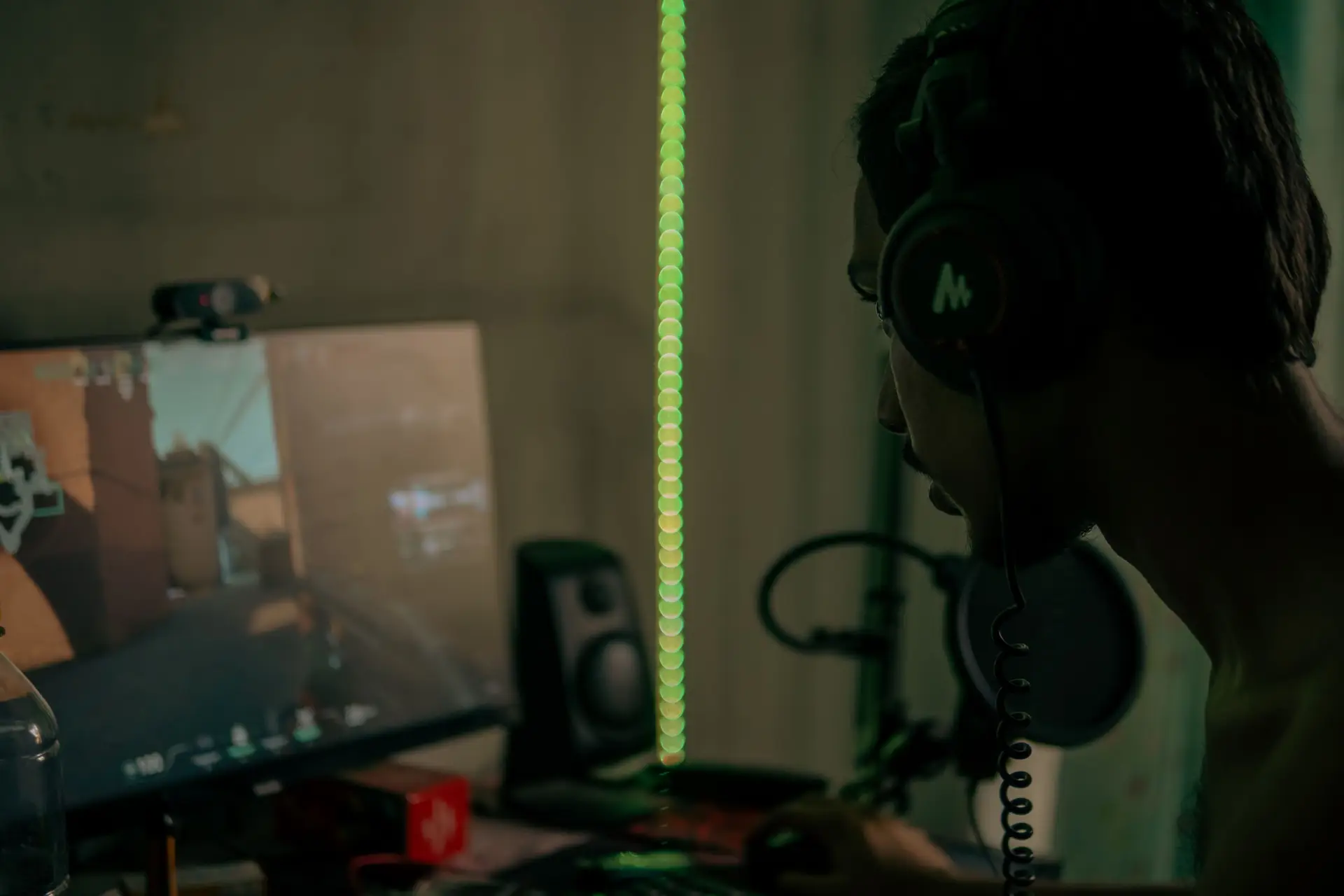
A creator holding a keyboard in a colourful recording space
A visual detail can become part of a character’s language.

Reading between the details

Look beyond the setup.

A keyboard, a studio light or a familiar opening line can establish a mood. The character becomes interesting when those details serve a purpose. Soren’s workbench invites close observation; Zephyr’s sound cues mark a change of scene; Mara’s clear explanations make a tactical choice easier to follow.

As you move through the archive, notice which details return and what they help you understand. A consistent persona grows from choices that belong together, rather than a collection of impressive equipment.

Explore visual identity

Fictional people. Thoughtful perspectives.

Every creator in this journal belongs to an authored world. Their stories explore the craft of streaming, the character of a community and the small details that make a format memorable.

Inside our editorial desk ↗